Casu Marzu, often translated as “rotten cheese,” is infamous for being one of the most pungent – and controversial – cheeses in the world. Its defining feature sets it apart: the presence of live insect larvae. Often called the world’s most dangerous cheese, Casu Marzu pushes the boundaries of fermentation and cultural culinary heritage, inspiring equal parts curiosity and revulsion among food enthusiasts.
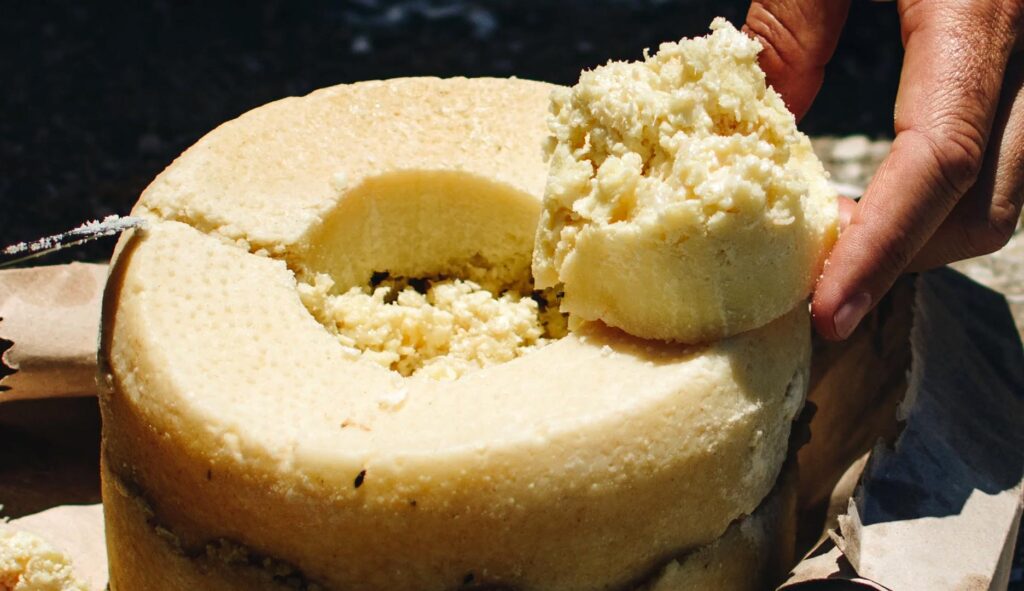
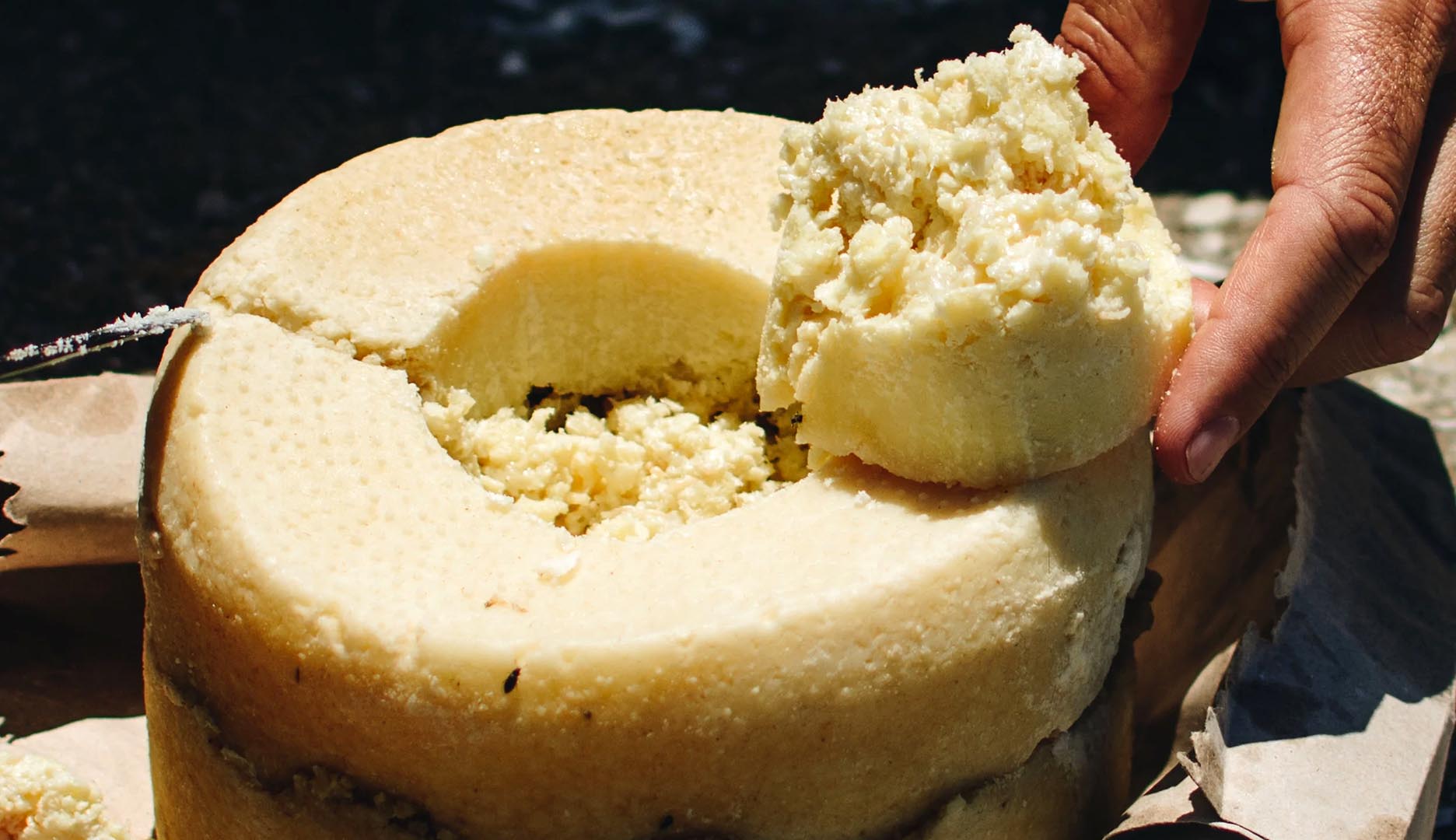
Casu Marzu begins as a standard wheel of Pecorino Sardo, a firm sheep’s milk cheese. To create Casu Marzu, cheesemakers intentionally introduce the cheese fly (Piophila casei). These flies lay eggs in the cheese, and when the larvae hatch, they begin to digest the fats within it, breaking down the texture into a soft, almost spreadable paste. The resulting cheese has a strong, ammonia-like aroma and a rich, creamy consistency.
This unique cheese hails from the island of Sardinia, Italy, where it has been made for generations as part of the region’s pastoral traditions. It is deeply embedded in the local culture and is often reserved for special occasions such as weddings or milestone birthdays. Despite its extreme nature, many Sardinians consider Casu Marzu a delicacy that represents their culinary identity and rural heritage.
Casu Marzu is typically enjoyed in small quantities due to its intense flavor and strong aroma. It is generally served at room temperature, when the cheese is soft, creamy, and at peak pungency; it is eaten on slices of Sardinian flatbread called pane carasau, which helps balance the richness of the cheese with a crisp, neutral texture.
Many locals consume the cheese with the live larvae still wriggling inside, believing they are essential to the authentic experience and indicative of freshness. Others prefer to remove the maggots using a knife or by sealing the cheese in a paper bag and waiting until the larvae suffocate and leave the cheese.
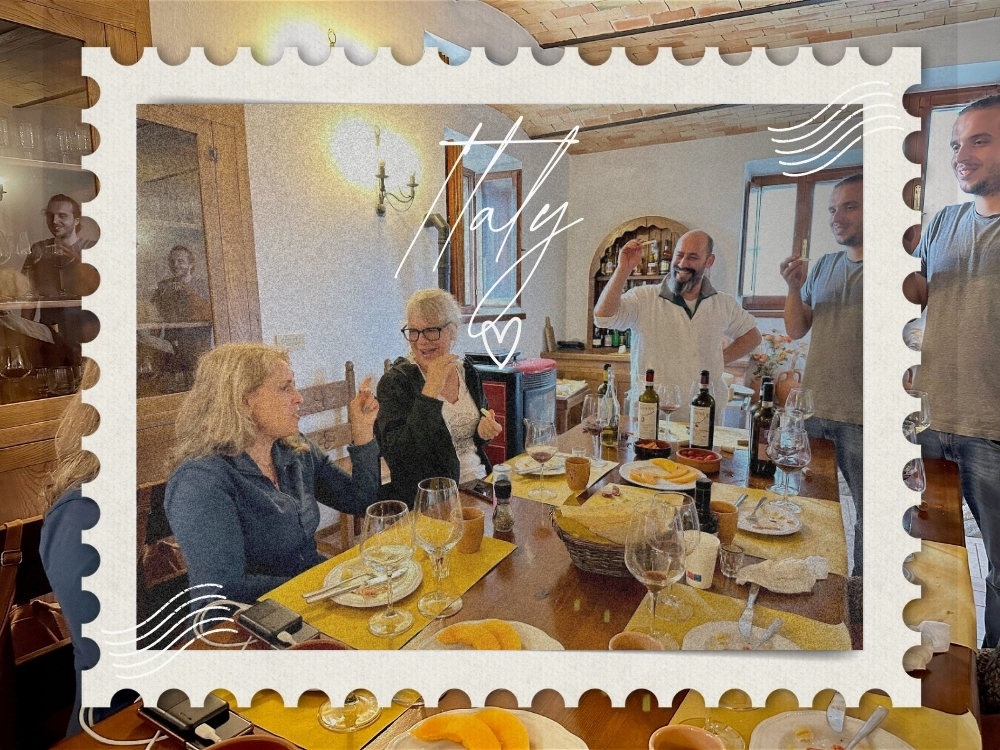
Casu Marzu is often accompanied by a strong red wine, like Cannonau, which can hold its own against the cheese’s bold, ammonia-like flavor. The experience is typically shared and eaten among family or friends, partly as a culinary rite of passage and partly as a communal celebration of Sardinian tradition.
One last note: Casu Marzu is technically illegal under European Union food safety regulations, which prohibit the sale of food containing live insects. The cheese is considered unsafe by international standards because the larvae can survive stomach acid and potentially cause enteric myiasis, a rare but possible intestinal infestation. As a result, Casu Marzu is banned for commercial sale across the EU and in many other countries. However, Sardinians continue to produce and consume it in small, informal circles, often outside the bounds of regulation, treating it as a symbol of resistance to homogenized food laws.
Have you ever had the chance to try this unique cheese? Would you try it if you had the opportunity? Let us know in the comments!