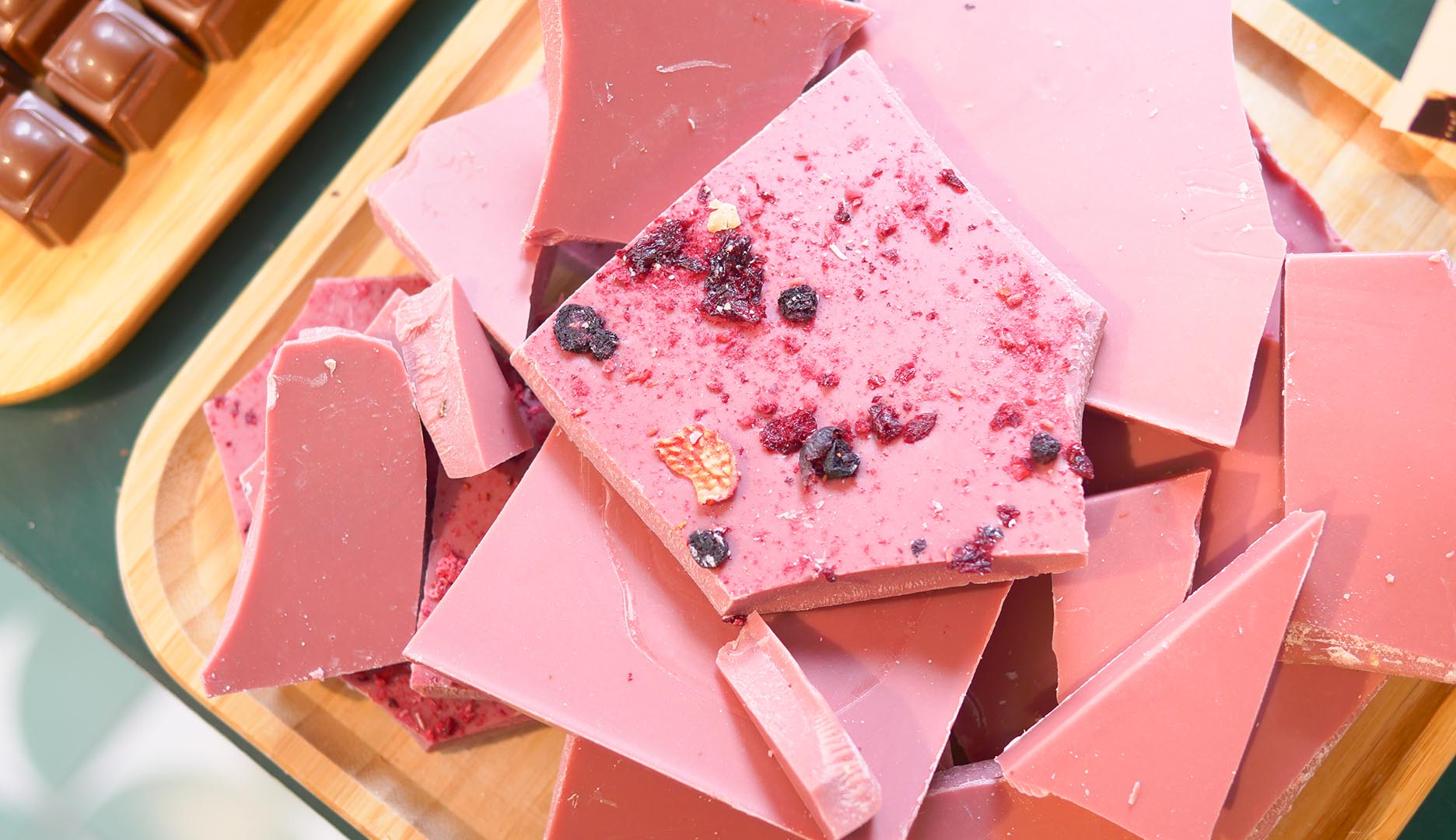
Ruby chocolate is a relatively new type of chocolate celebrated for its unique pink hue and distinctive tangy fruity flavor. The invention and launch of ruby chocolate marked a major milestone in the chocolate industry, offering a new sensory experience with its combination of creamy texture, fruity tartness, and visually striking appearance. Introduced in 2017 by the Swiss company Barry Callebaut, ruby chocolate is often described as the fourth type of chocolate, joining dark, milk, and white varieties.
Ruby chocolate originates from the careful selection and processing of ruby cocoa beans, which are grown in traditional cocoa-producing regions such as Ivory Coast, Ecuador, and Brazil. These regions provide the ideal climate and soil conditions for cultivating cocoa, including the specific types of beans used to create ruby chocolate. It is made from ruby cocoa beans, which are not a distinct variety of cocoa but rather a specific selection of beans that possess natural reddish tones. The vibrant color and flavor are brought out through a specialized processing method, which remains a closely guarded trade secret.
The creation of ruby chocolate is the result of over a decade of research and innovation by Barry Callebaut. The beans’ unique properties are preserved during processing to produce the chocolate’s signature pink color and tangy, berry-like flavor, all without the use of added colors or flavorings. This groundbreaking development in the chocolate industry has its roots in the expertise of cocoa cultivation and advanced manufacturing techniques, making ruby chocolate a distinctive product with global appeal.
What does ruby chocolate taste like?
Ruby chocolate has a distinct flavor profile that sets it apart from dark, milk, and white chocolate. The flavor is often described as fruity and tangy, with subtle berry-like notes reminiscent of raspberries or red currants. It is less sweet than white chocolate but not as intense or bitter as dark chocolate, offering a balance that appeals to a wide range of palates.
Its creamy texture complements its tangy flavor, creating a unique sensory experience. What makes ruby chocolate particularly intriguing is that its fruity notes and pink hue come naturally from the ruby cocoa beans and the special processing method used, with no added fruit flavors or colors. This combination of taste and appearance has made ruby chocolate popular for both eating on its own and using in creative desserts and confections.
How do you use ruby chocolate?
Ruby chocolate can be used much like other types of chocolate in a variety of culinary applications. Its unique flavor and vibrant hue make it especially appealing for creative and visually striking desserts.
- Confections: It can be molded into bars, truffles, or bonbons, either on its own or paired with complementary flavors like berries, nuts, or citrus.
- Baking: Ruby chocolate can be incorporated into cookies, cakes, brownies, or tarts, adding a subtle tangy flavor and a pop of color. It is often used for decorative drizzles, glazes, or as a filling.
- Ganache and Mousse: Its creamy texture works well in ganaches, mousses, and other smooth, rich fillings.
- Coating and Dipping: Ruby chocolate is ideal for coating fruits, nuts, or biscuits, or for dipping items like pretzels or marshmallows.
- Drinks: It can be melted into warm milk or cream to create a ruby hot chocolate or used in milkshakes and cocktails for a distinctive flavor and color.
While ruby chocolate can generally be substituted for white, milk, or dark chocolate, its tart, fruity taste might not work in all recipes. It pairs best with flavors that enhance or complement its unique profile, such as berries, vanilla, or citrus.
Have you ever had ruby chocolate? What did you think? Let us know in the comments!