When I think of the Italian table, I don’t think of a single image.
I think of a composition.
An orchestration.
A performance in movements.
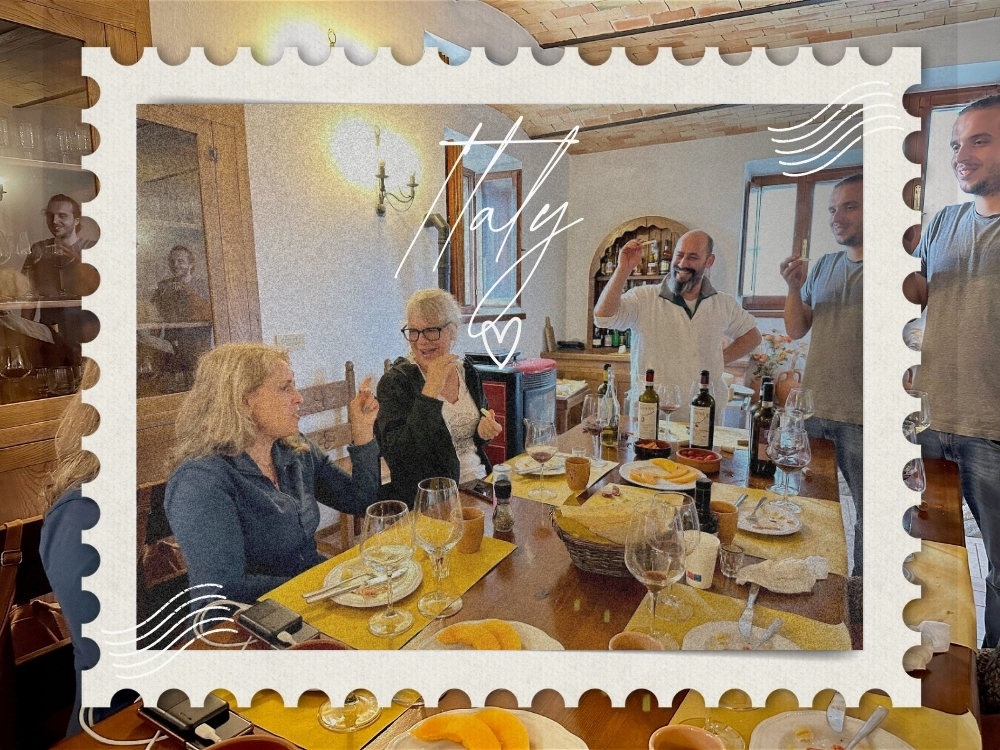
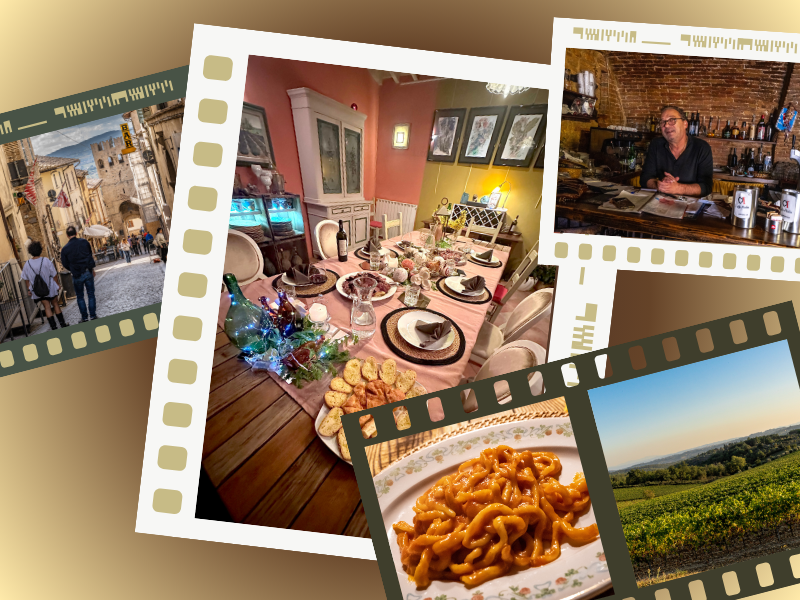
I see long, rough-hewn tables set beneath amber sunlight. Vineyards rolling in the distance. A rustic garden. The quiet hum of nature just beyond the conversation. Platters of seasonal vegetables. Grilled and cured meats. Bowls of pasta glistening with olive oil and herbs. Bottles of local wine catching the light as they’re passed from hand to hand.
Family and friends gather.
Conversation rises and falls.
Sometimes voices lift sharply — animated, emphatic — only to soften moments later with a raised glass and a hearty “Salute” or “Cin cin,” a signal that all is well, that affection remains intact.
The Italian table is not simply about food.
It is about people.
And it unfolds in movements.
The Prelude: The Kitchen
The first movement begins before anyone sits down.
In the kitchen.
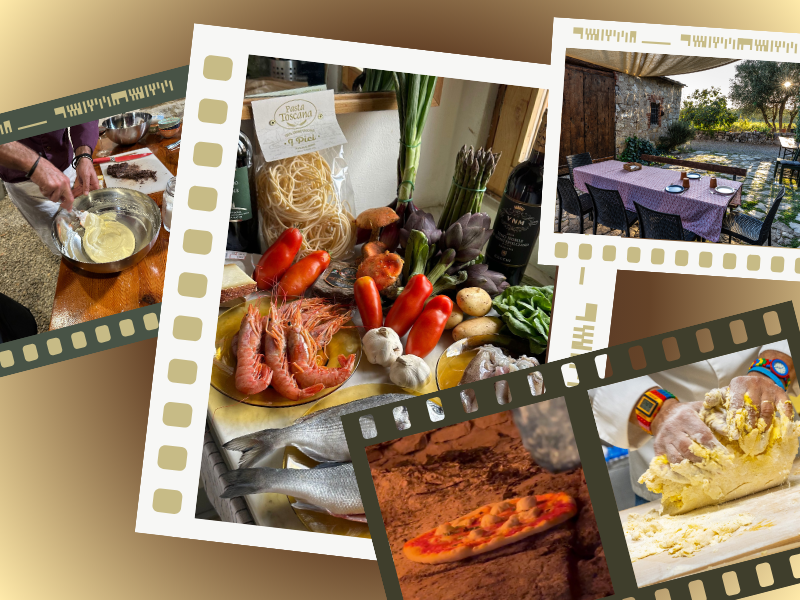
Ingredients are prepared attentively — tomatoes simmering slowly, herbs chopped, meat watched carefully over flame. Someone tastes, adjusts, tastes again.
Conversation is already happening.
Stories. Gossip. Recipes debated. Techniques discussed. Memories attached to certain dishes.
The kitchen is the overture.
The warmup.
A duet of preparation and anticipation.
Inside, hands move with intention. Outside, guests begin to gather. Two conversations happening simultaneously, each unaware of how perfectly they complement the other.
The tempo builds.
The Allegretto Vivace: The Meal
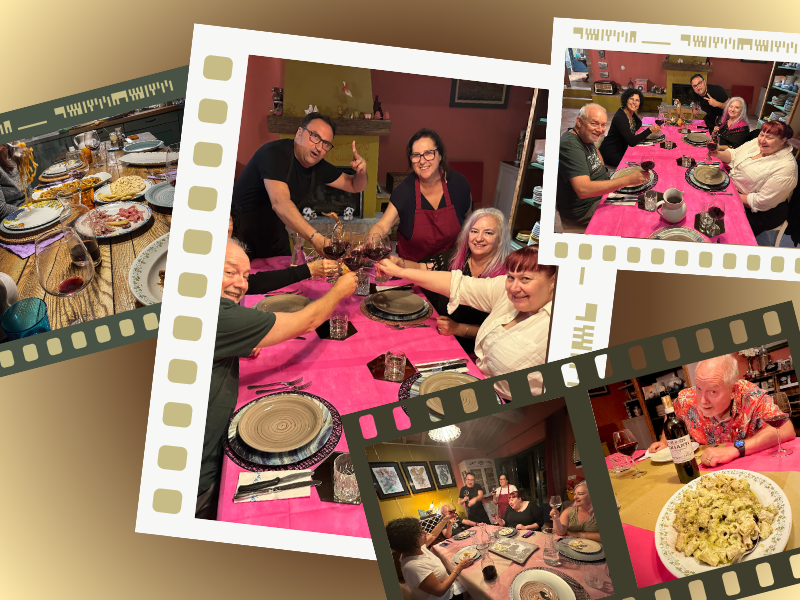
Then the table fills.
Antipasti arrive. Wine is poured. Chairs scrape against stone. Plates are passed. Hands reach. Laughter erupts.
The main movement begins — allegretto vivace, lively and flowing — with occasional sforzando bursts of emphasis when a story crescendos or an opinion lands firmly.
There is rhythm to it.
Food is not rushed.
Courses unfold naturally.
A brief silence — a caesura — falls as the first bites are taken. Then conversation resumes, melodic and layered.
Every seat at the table matters.
Every voice contributes.
The Italian table is participatory. There is no audience. Only players.
The Dolce & The Adagio
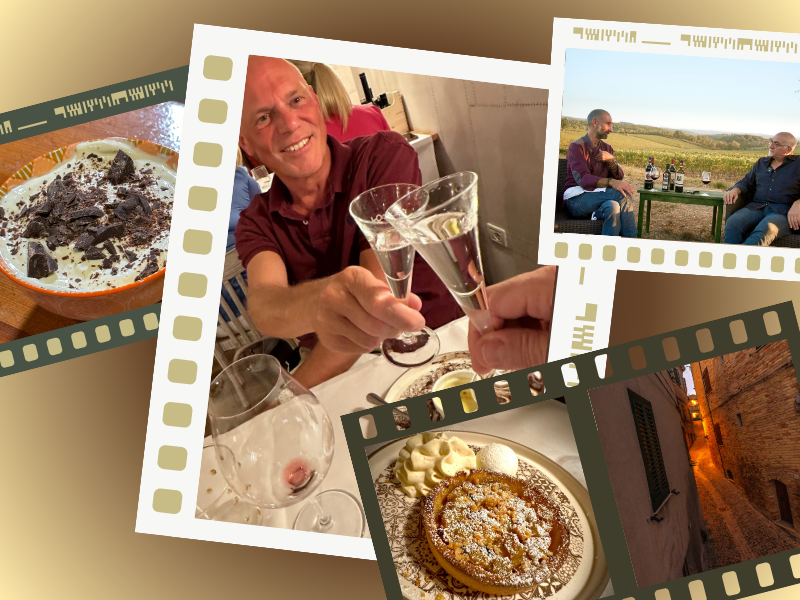
Dessert arrives.
Perhaps a simple fruit tart. Perhaps tiramisu — made properly, without cream, layered and balanced.
Coffee follows.
Then digestivo.
The tempo shifts.
Adagio.
Slower. More introspective.
Conversations deepen. The light softens. The air cools. Someone leans back. Someone lights a cigarette or cigar. Glasses clink gently.
This is not about food anymore.
It is about being together.
The meal is complete, but the gathering continues.
And no one is watching the clock.
The Trattoria as One-Act Play
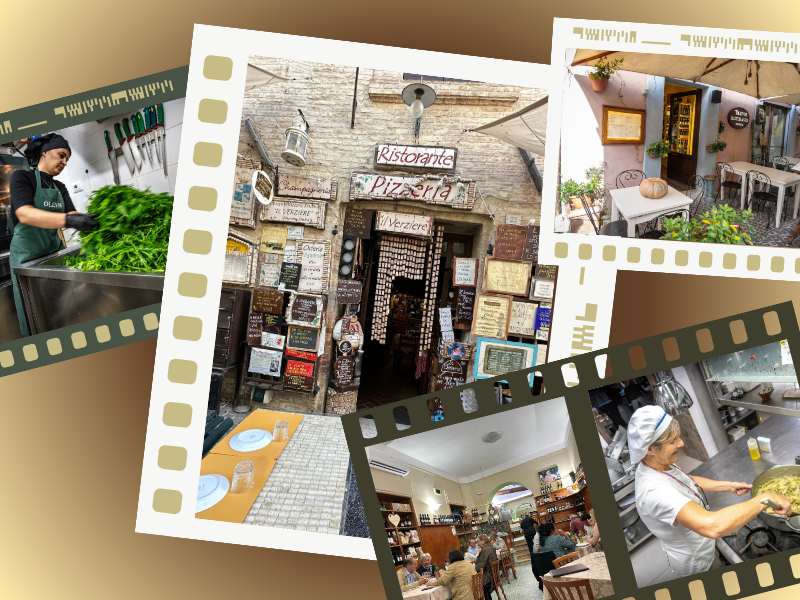
The small trattoria with the handwritten menu is a different kind of performance.
More contained.
The kitchen and dining room are separated by a threshold. Two acts unfolding simultaneously.
In the dining room, each table becomes its own vignette. Regulars greet servers by name. A familiar call is shouted toward the kitchen. Friends settle in.
In the kitchen, pride remains constant. Ingredients are handled with care. Plates are assembled deliberately.
Servers weave between tightly spaced chairs with fluid precision, unaffected by the choreography around them. Dishes arrive with a smile and a quiet “Buon appetito.”
Again, a moment of silence as first bites are taken.
Then the melody resumes.
Each table its own conversation.
Each conversation contributing to the larger soundscape.
As the evening winds down, the tempo softens. Adagio again. The last guests linger. The proprietor steps out to sit with regulars who have long since become friends. Lights dim. Chairs stack. The final notes fade.
More Than a Meal
The Italian table is not furniture.
It is infrastructure.
It is where culture is rehearsed daily.
Recipes are transmitted. Stories are retold. Children observe. Traditions are reinforced without formal instruction.
This is where preservation happens.
Not in museums alone — but in kitchens, on terraces, at rough wooden tables under open sky.
And when you are invited into that space — whether in someone’s home or in a small trattoria — you are stepping into a living composition.
Miz Travel is not about eating well.
It is about understanding that the table is where Italy lives.
If you sit long enough, if you listen, if you participate, you begin to hear the music.
-Rico Mandel, CEO, Miz En Place
Ready to experience Italy?
✈️ Fill out our custom Italy or Greece adventures trip interest form – Tell us about your travel style, interests, and dream experiences. We will hand-curate a personalized Miz En Place journey just for you—crafted with care, flavor, and unforgettable moments.
📧 Have questions? Email our friendly customer service team anytime, or try the live chat function on our site! We are here to guide you, share insider insights, and help turn your travel vision into reality.
✨ Schedule a free discovery call to learn more about a trip or experience that has caught your eye, and ask any questions—we’re here to help you plan your perfect adventure!